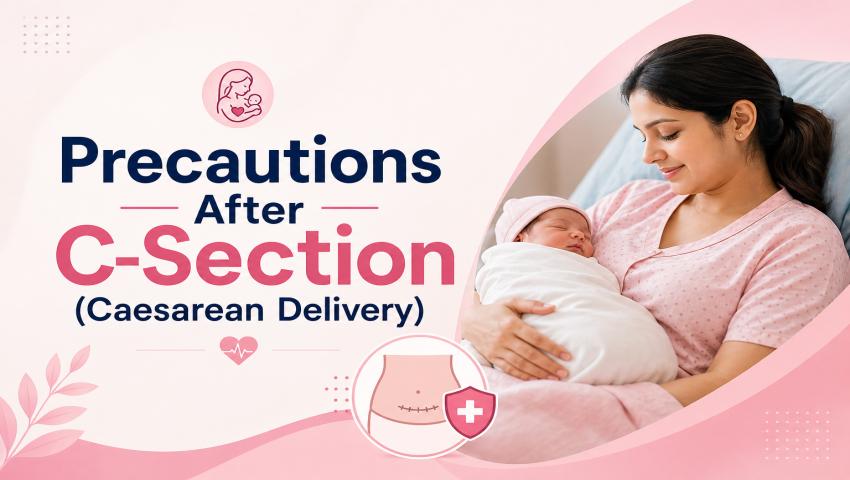
A Caesarean section (C-section) is a major surgery. After delivery, your body needs proper rest and care to recover well. The first 6 weeks after a C-section are extremely important for proper healing. Many new mothers unknowingly make small mistakes that can delay recovery or cause complications. Understanding the right precautions after C-section is essential to avoid problems like wound infections, internal pain, or stitches opening up.
At Kolte Hospital, Ravet, one of the best maternity hospitals in Ravet, PCMC. Dr. Deepak Kolte, with more than 16 years of experience as a gynecologist and obstetrician, guides every new mother through a safe and smooth recovery. This easy-to-understand guide will help you know exactly what to avoid, what to do, and when to seek help.
1. Take Complete Rest:
Your body has gone through major surgery, so rest is extremely important for healing. Overexertion can delay recovery and increase pain.
- Sleep as much as possible, especially in the first 2 weeks.
- Avoid heavy housework, cooking, or lifting for at least 6 weeks.
- Do not lift anything heavier than your baby during the initial recovery period.
- Ask your family members to help with household tasks.
2. Take Care of Your Wound (Stitches):
The surgical incision (stitches) is the most sensitive area after a C-section and needs proper care to prevent infection.
- Keep the wound area clean and dry at all times.
- Do not scratch or rub the stitches.
- Change the dressing as advised by your doctor.
- Watch for warning signs like redness, swelling, pus, or pain.
- Wear loose, soft cotton clothes that do not press on the wound.
- Avoid submerging in water (bath tub or swimming pool) until the wound fully heals.
3. Manage Pain Properly:
Some pain and discomfort after a C-section is normal. Here is how to handle it safely:
- Take only medicines prescribed by Your Doctor.
- Painkillers that are safe for breastfeeding will be recommended by the doctor.
- Hold a pillow gently against your tummy when you cough, sneeze, or laugh. This reduces pain.
- Sit up and get out of bed slowly; do not rush.
4. Follow a Healthy Diet:
Good nutrition helps your body heal faster and also supports breastfeeding.
- Eat small, frequent meals instead of large ones.
- Include iron-rich foods: spinach, lentils, beans, and green leafy vegetables.
- Eat protein-rich foods: eggs, milk, paneer, chicken, and fish (if non-veg).
- Drink plenty of water, at least 8 to 10 glasses per day.
- Eat fiber-rich foods to avoid constipation: fruits, vegetables, and whole grains.
- Avoid spicy, oily, and junk food in the first few weeks.
- Do not skip meals; your body needs energy for recovery and feeding your baby.
5. Breastfeeding After C-Section:
You can and should breastfeed after a C-section. It is good for both you and your baby.
- Try breastfeeding as soon as possible after delivery, ideally within 1 hour.
- Use a feeding pillow to support the baby and avoid pressure on the wound.
- The ‘side-lying’ or ‘football hold’ position is more comfortable after a C-section.
- Drink plenty of fluids to maintain a good milk supply.
- If you face difficulty, ask the nursing staff at Kolte Hospital for help.
6. Physical Activity Start Slowly:
Exercise is important, but only at the right time and in the right way.
- Start with gentle walking around your home after 24 to 48 hours (as advised by the doctor).
- Avoid stairs as much as possible in the first week.
- Do not do heavy exercise, running, or yoga until the doctor gives permission (usually after 6–8 weeks).
- Light breathing exercises can help prevent lung complications.
- Pelvic floor exercises (Kegel exercises) can begin within a few days after surgery.
7. Take Care of Bladder and Bowels:
- A catheter will be placed during surgery to drain urine. It is usually removed within 24 hours.
- Drink plenty of water to keep the urinary system healthy.
- Avoid straining during bowel movements, eat fibre-rich foods and drink water.
- If you feel constipated, inform the doctor that a safe stool softener may be prescribed.
- Do not ignore the urge to urinate, as a full bladder can delay recovery.
8. Take Care of Your Emotional Health:
Recovery after a C-section is not just physical; emotional well-being is equally important.
- It is normal to feel tired, emotional, or sad after delivery. This is common and usually goes away in a few days with rest and support.
- Talk to your husband, family, or friends about how you feel.
- If you continue to feel sad, worried, or low even after 2 weeks, it’s important to consult a doctor, as it may be postpartum depression.
9. Warning Signs: Visit the Doctor Immediately
Do not ignore these signs. Visit Kolte Hospital in Ravet immediately if you notice:
- High fever (above 101°F / 38.5°C)
- Heavy bleeding or foul-smelling vaginal discharge
- Severe pain or swelling around the wound
- Pus or discharge from the wound
- Difficulty breathing or chest pain
- Swelling or pain in the legs (could be a blood clot)
- Burning or pain while urinating
- Severe headache or vision changes
Do Not Miss Your Follow-Up Appointments:
Regular check-ups are necessary to ensure your body is healing properly after surgery.
- Attend all scheduled appointments.
- Discuss any discomfort or concerns with your doctor.
- Follow medical advice regarding diet, activity, and medications.
- The final check-up is usually done at 6 weeks after the C-section.
Final Note:
Recovery after a C-section takes time, but with proper care, rest, and medical guidance, you can heal smoothly and safely. Always listen to your body and do not hesitate to seek medical help when needed.For expert care and support, consult Dr. Deepak Kolte (more than 16 years of experience) at Kolte Hospital, Ravet, Pune, recognised as the best gynecologist in Ravet and a trusted maternity hospital in Ravet, PCMC.
Call now to book your consultation: 8042755821
Take the first step towards a safe and healthy recovery. Contact us today!
FAQs:
After a C-section, focus on proper rest, avoid heavy lifting, take care of your stitches, eat a healthy diet, and start gentle walking as advised. Also, watch for warning signs like pain, fever, or unusual discharge.
As advised by Dr. Deepak Kolte, taking these precautions in the first 6 weeks helps ensure a safe and smooth recovery.
Most mothers can slowly return to normal activities after 4–6 weeks, depending on their recovery and doctor’s advice. For safe recovery guidance, consult the best gynecologist in Ravet, who can guide you based on your healing progress.
You should avoid bending for the first few weeks after a C-section, as it can put pressure on your stitches. You can slowly start light bending after 4–6 weeks, depending on your healing.
Avoid heavy lifting, strenuous work, bending suddenly, and putting pressure on your abdomen for the first few weeks. Also, avoid ignoring pain, poor diet, or skipping rest.
Taking proper precautions helps your stitches heal faster and ensures a smooth recovery.
Yes, you can climb stairs, but only slowly and in a limited way during the first few weeks. Avoid frequent climbing and take support to prevent strain on your stitches.
It’s best to avoid sitting on the floor for the first 4–6 weeks, as it can put pressure on your stitches and make it difficult to get up. You can slowly try after recovery, based on your comfort.