The scan report says “uterine fibroids,” and your mind jumps ahead. Will I need an operation? Is it serious? Many women feel this fear within minutes of hearing the word fibroid.
Here is the good news. Most fibroids are non-cancerous, and many need no surgery at all. In this blog, Dr. Dipak S. Kolte, Best Gynecologist in Ravet and Founder and Lead Consultant at Kolte Hospital, Ravet, explains when fibroid removal surgery is advised, the types of surgery, and what recovery looks like. With strong experience in laparoscopic surgeries, high-risk pregnancy care, and infertility treatments, the team at Kolte Hospital, Ravet, is known as the Best Maternity Hospital in Ravet.
What Are Uterine Fibroids?
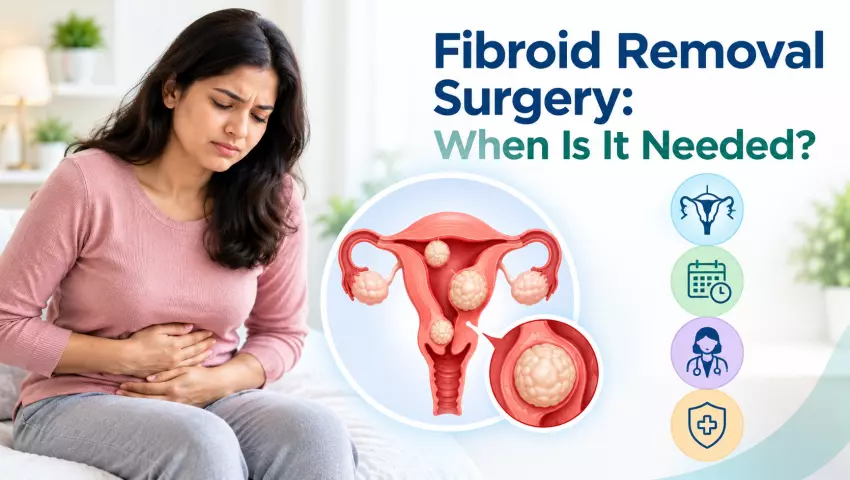
Uterine fibroids are non-cancerous growths that form in the muscle wall of the uterus. Doctors also call them myomas or leiomyomas. A fibroid can be as small as a seed or as big as a melon, and a woman may have one or many.
Fibroids classification is based on where they grow:
- Intramural: Inside the muscle wall of the uterus. This is the most common type.
- Subserosal: On the outer surface of the uterus, sometimes hanging on a thin stalk.
- Submucosal: Just under the inner lining, growing into the uterine cavity. Even small ones can cause heavy bleeding.
Fibroids are very common, especially between 30 and 50 years of age. Many women never have any symptoms and come to know about them only during a routine scan.
Do All Fibroids Need Surgery?
No, they do not. Small fibroids that cause no trouble are usually just monitored. This is called watchful waiting. Your doctor checks the size with an ultrasound every 6 to 12 months and starts treatment only if something changes.
Fibroids depend on the hormone oestrogen, so they often shrink after menopause. Medicines can also control heavy bleeding and pain for some time, but they do not remove the fibroids.
How fibroids are treated depends on their size, their position, your symptoms, your age, and your plans for pregnancy. This is why every woman needs a personal plan and not a ready-made answer.
When Is Fibroid Removal Surgery Needed?
Surgery for fibroids in uterus is usually advised when fibroids affect your health or daily life. These are the common reasons:
- Heavy or long periods: Soaking pads quickly or bleeding for many days can lead to anaemia, weakness, and tiredness.
- Pelvic pain or pressure: A constant feeling of heaviness or pain in the lower abdomen.
- Pressure on nearby organs: Frequent urination, difficulty emptying the bladder, or constipation.
- Fast growth or large size: A fibroid that grows quickly or becomes very big on the scan.
- Trouble conceiving or repeated miscarriage: When fibroids are the likely cause after other reasons are checked.
- Medicines not working: Symptoms continue even after medical treatment.
- Doubt about the growth (rare): If a growth looks unusual on the scan, removal and testing may be advised.
If you have one or more of these problems, please do not ignore them. Early advice gives you more treatment choices.
Fibroids and Fertility: Does Surgery Help?
Most women with fibroids can conceive and deliver normally. But some fibroids make pregnancy harder. The ones that matter most are those that change the shape of the uterine cavity, mainly submucosal fibroids and some large intramural fibroids.
Such fibroids may block the embryo from settling in the uterus or increase the risk of miscarriage. In selected women, removing them can improve the chances of a healthy pregnancy.
Important: Not every fibroid needs to be removed before pregnancy. The decision is made only after a full evaluation, including your age, scan findings, fertility history, and symptoms. Please do not decide on surgery based on a scan report alone.
Types of Fibroid Surgery:
There are several ways to remove fibroids from the uterus. The right choice depends on the size, number, and position of fibroids and on whether you wish to keep your uterus.
A quick note on terms: many people search for myectomy surgery or myectomy procedure, but the correct medical name is myomectomy. A myomectomy operation removes only the fibroids and keeps the uterus in place.
- Myomectomy: It can be done through laparoscopy, hysteroscopy, or open surgery. Hysteroscopic removal is the usual treatment of submucosal fibroids, as the fibroid is reached through the natural passage with no cuts on the abdomen. Open myomectomy uses a larger cut on the lower abdomen and is kept for difficult cases.
- Hysterectomy: This means removing the uterus. In some women, a removed uterus with fibroids is the best long-term solution, especially when the family is complete and symptoms are severe. Fibroids removal of the uterus in this way means they cannot come back.
- Non-surgical options: Medicines can reduce bleeding and pain. Uterine artery embolisation blocks the blood supply of fibroids so that they shrink. It is not suitable for every woman, especially those planning pregnancy.
Why Laparoscopic Fibroid Surgery Is Often Preferred?
Laparoscopy and fibroids go well together when the fibroids are of suitable size. In laparoscopic fibroids removal, the surgeon makes a few small cuts and uses a camera and fine instruments to remove the fibroids. Dr. Dipak S. Kolte regularly performs such laparoscopic surgeries for women at Kolte Hospital.
The benefits of laparoscopy to remove uterine fibroids are clear:
- Small cuts and smaller scars
- Less pain after surgery
- Shorter hospital stay
- Faster return to normal routine
There are limits too. Very large fibroids or a large number of fibroids may need open surgery. A good doctor will explain honestly which laparoscopic treatment for fibroids suits you and which does not.
How to Prepare and What to Expect on the Day of Surgery?
Before surgery, your doctor will advise an ultrasound, blood tests, and sometimes an MRI to map the fibroids. If you are anaemic, iron treatment is given first to make surgery safer.
You will be asked to stop eating and drinking for several hours before surgery. Your doctor will also tell you which regular medicines to continue or stop. The surgery is done under anaesthesia, so you do not feel any pain. Most women stay in the hospital for 1 to 2 days after laparoscopic surgery and a little longer after open surgery.
Recovery After Fibroid Surgery:
After laparoscopic surgery, most women return to light daily work in 1 to 2 weeks. After open surgery, full recovery usually takes 4 to 6 weeks.
At home, take enough rest and start short walks early, as they help healing and prevent clots. Keep the wound clean and dry, and avoid heavy lifting until your doctor allows it.
Body changes after myomectomy are usually positive. Most women notice lighter periods and relief from pain and pressure. Mild spotting and tiredness in the first few weeks are common. Please contact your doctor if you have heavy bleeding, high fever, severe pain, or a wound that looks red or leaks.
Follow-up visits are important. Dr. Kolte also guides women on the right time to try for pregnancy, which is usually a few months after surgery, based on the type of surgery done.
Risks and Can Fibroids Come Back?
Every surgery has some risks. For fibroid surgery, these include bleeding, infection, and scar tissue formation. In rare cases, the uterus may need to be removed if bleeding cannot be controlled. Choosing an experienced team reduces these risks.
So, can fibroids be cured? Surgery removes the fibroids you have today, but new ones can grow later, especially when there were many fibroids or when surgery was done at a young age. Hysterectomy is the only permanent solution. This is why regular follow-up scans matter after myomectomy.
Consult Dr. Dipak S. Kolte at Kolte Hospital, Ravet:
If you have fibroids and are unsure what to do next, a clear opinion can bring peace of mind. When looking for myomectomy surgeons, check for experience in laparoscopic techniques and a balanced approach that does not push surgery when it is not needed.
With 16+ years of experience in laparoscopic surgeries, Dr. Kolte and the team at Kolte Hospital in Ravet, PCMC, Pune, will explain all your options in simple words. Book a consultation today and take the first step towards relief.
FAQs:
Small fibroids may stop growing or shrink after menopause, and medicines can control symptoms. But fibroids rarely disappear fully on their own. Regular check-ups tell you whether they need treatment.
Yes, when done by an experienced surgeon after proper evaluation. Modern laparoscopic methods are safe and have a faster recovery. Your doctor will explain the specific risks for your case before surgery.
Most women go home in 1 to 2 days and resume light work in 1 to 2 weeks. Full healing takes a little longer, and your doctor will guide you on exercise and sex.
Many women conceive after myomectomy. Dr. Dipak S. Kolte advises waiting for the period suggested after surgery, which depends on the depth of the fibroid and how the uterus was repaired. In some cases, delivery by C-section may be advised.
Very rarely. Fibroids are almost always non-cancerous, and the chance of them turning into cancer is extremely low. A fast-growing fibroid or one that looks unusual on the scan should be checked by your doctor.
Disclaimer: This blog is for general information only and does not replace medical advice. Please consult a qualified gynecologist for your personal diagnosis and treatment.