
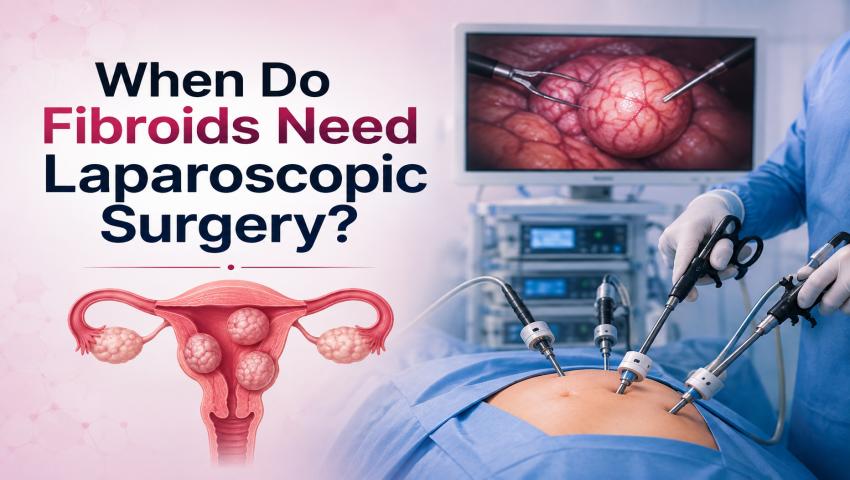
A fibroid diagnosis can feel alarming the moment you hear it, especially if the word “surgery” comes up in the same breath. The truth is far less frightening. Most fibroids are harmless growths that never need an operation at all. Only a smaller group of cases, where symptoms or fertility are genuinely affected, move toward a fibroid operation. This blog walks you through how that decision is actually made, when laparoscopic myomectomy becomes the right path, and what to expect if you are heading toward one.
What Makes a Fibroid Surgical?
Not every fibroid asks for treatment. Many are found by chance during a routine ultrasound, sitting quietly without causing a single symptom. Doctors call these incidental findings, and they usually just need yearly monitoring.
A fibroid turns surgical when it starts affecting daily life. Heavy periods that lead to anemia, pelvic pain that does not respond to medication, or pressure on the bladder and bowel are the common triggers. Fertility concerns matter too. A fibroid pressing into the uterine cavity can interfere with implantation or raise the risk of miscarriage, and that alone can justify surgery even without heavy bleeding.
Location decides more than size here. A small fibroid inside the uterine cavity can cause more trouble than a large one sitting on the outer wall. This is why an experienced gynecologist always maps the fibroid, its size, position, and blood supply before recommending any procedure.
When Laparoscopic Myomectomy Is the Right Fit?
Laparoscopic myomectomy is usually the first choice when a fibroid needs to come out but the uterus itself needs to stay. It works well for fibroids that are moderate in number, sit on or within the uterine wall, and are accessible through small abdominal incisions using a camera and fine instruments.
This approach suits women who still want to conceive, since it preserves the uterus while removing the growth responsible for their symptoms. Recovery is quicker than open surgery, scarring is minimal, and blood loss during the procedure is generally lower.
At Kolte Hospital, Dr. Dipak S. Kolte evaluates every case individually before suggesting this route. As a consultant obstetrician, gynecologist, and IVF specialist based in Ravet, he places importance on precise fibroid mapping through ultrasound before deciding whether a laparoscopic approach will be safe and effective for a particular patient.
When It's Not Enough?
Laparoscopic myomectomy has its limits, and a good surgeon will tell you this upfront rather than force a technique that does not suit the case. Very large fibroids, generally those crossing a certain size threshold, become harder to maneuver and remove safely through small incisions.
Multiple fibroids scattered across the uterus also complicate things. Removing several growths laparoscopically can extend surgery time and increase bleeding risk, so open (abdominal) myomectomy is sometimes safer in these situations. When the uterus is filled with numerous small fibroids and childbearing is complete, a hysterectomy may be discussed as a more permanent solution.
What matters most is not forcing every fibroid operation into one surgical box. A tailored decision, based on number, size, and the patient’s fertility goals, gives better outcomes than a one-size-fits-all approach.
Laparoscopic Surgery vs. Open Surgery vs. UAE:
Patients often ask how laparoscopic myomectomy compares with open surgery or uterine artery embolization (UAE), and each has a distinct place.
Open myomectomy involves a larger abdominal incision and is reserved for very large or numerous fibroids that cannot be safely managed with a laparoscope. Recovery takes longer, but it allows the surgeon more direct control in complex cases.
Uterine artery embolization blocks the blood supply feeding the fibroid, causing it to shrink over time without any incision. It suits women who are not planning future pregnancy, since its effect on fertility is less predictable than a myomectomy.
Laparoscopic myomectomy sits between these two, offering a minimally invasive option that still allows direct removal of the fibroid while keeping the uterus intact. Teams at Kolte Hospital in Ravet and PCMC discuss all three routes with patients so the choice matches their symptoms, fertility plans, and overall health.
What Happens If You Wait?
Delaying treatment for a symptomatic fibroid rarely makes things easier. Heavy bleeding that continues unchecked can lead to significant anemia, leaving a woman fatigued and short of breath even with routine activity. Fibroids pressing on the bladder or bowel can worsen gradually, causing more frequent urination or constipation over time.
For women exploring fibroids and fertility treatment, delaying surgical removal can lead to repeated implantation failure or increased risk of early pregnancy loss. Fibroids can also grow larger during pregnancy itself under the influence of rising estrogen, sometimes complicating delivery or the site of a cesarean incision.
This does not mean every fibroid needs urgent action. It simply means that ignoring worsening symptoms, hoping they resolve on their own, is rarely the safer choice.
Recovery After Laparoscopic Myomectomy:
Recovery after laparoscopic myomectomy is generally smoother than after open surgery. Most women are up and walking within a day, with hospital stays lasting one to two days depending on the case.
Mild gas pain from the laparoscopic procedure and some spotting are common in the first week and settle gradually. Light activities can usually resume within one to two weeks, while heavier lifting and strenuous exercise are best avoided for four to six weeks to let the uterine wall heal properly.
Every myomectomy recovery time varies with the number of fibroids removed and a patient’s overall health, so your surgeon’s specific advice should always take priority over general timelines found online.
The Rare Case: When to Worry About Cancer?
It helps to know that fibroids turning cancerous is genuinely rare, affecting roughly 1 in tens of thousands of cases. Almost all fibroids remain benign for life.
The one warning sign worth taking seriously is a fibroid that grows rapidly after menopause. Since fibroids depend on estrogen, they typically shrink once periods stop. Sudden growth during this phase needs prompt evaluation, usually through imaging and sometimes a biopsy, to rule out malignancy.
This rare exception is precisely why annual monitoring matters even for fibroids that need no treatment today. Dr. Dipak Kolte often reminds patients that this kind of vigilance, rather than fear, is what keeps fibroid care simple and safe over the years.
What to Do Next?
If you have been told you have fibroids, the first step is simple: do not panic and do not ignore it either. Track your symptoms honestly, whether that is bleeding pattern, pain, or difficulty conceiving, and get a proper ultrasound-based fibroid mapping done.
From there, a detailed conversation with your gynecologist will clarify whether monitoring, medication, or a fibroid operation such as laparoscopic myomectomy fits your situation. Women in Ravet and nearby parts of Pune can consult the team at Kolte Hospital for this kind of individualized fibroid assessment.
FAQs:
Most women experience mild discomfort and gas-related pain for a few days, managed easily with medication. It is significantly less painful than open surgery.
New fibroids can develop over time, though the ones removed do not return. Regular follow-up ultrasounds help catch any new growth early.
Most gynecologists recommend waiting three to six months, allowing the uterine wall to heal fully before pregnancy.
No. Many fibroids are asymptomatic and only need yearly monitoring. Surgery is considered only when symptoms, fertility, or growth patterns demand it.
A myomectomy removes only the fibroid and preserves the uterus, while a hysterectomy removes the uterus entirely and is usually reserved for women who have completed childbearing or have extensive fibroid involvement.