
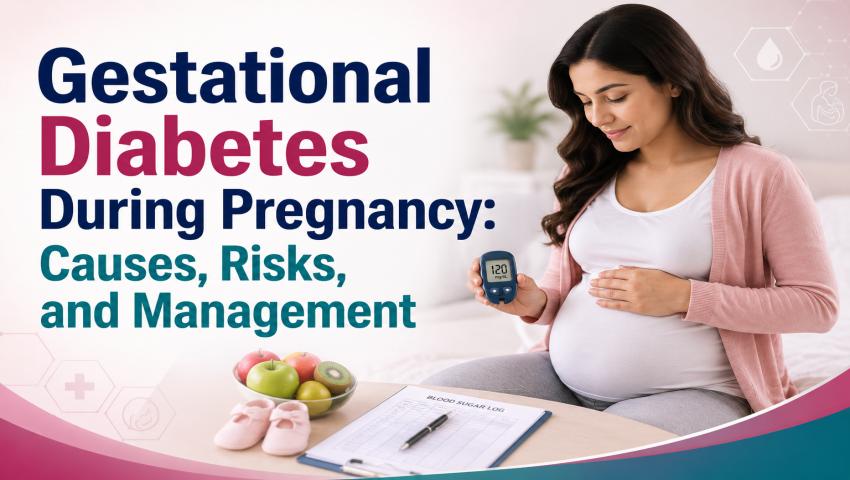
Can a healthy woman with no history of diabetes suddenly develop it during pregnancy? Yes, and it happens far more often than most expecting mothers realise. Gestational diabetes affects a large share of pregnancies, yet many women only hear the term after a routine blood test flags it.
At Kolte hospital, our maternity team sees this question almost every week from expecting mothers across Ravet and PCMC. This guide walks through why it happens, how it is diagnosed, what it means for you and your baby, and how it is managed safely through delivery and beyond.
What Is Gestational Diabetes and Why Does It Happen?
Gestational diabetes is high blood sugar that develops during pregnancy in women who did not have diabetes before. It usually shows up in the second half of pregnancy and often settles on its own after delivery.
Hormonal Changes Affecting Insulin During Pregnancy:
The placenta releases hormones that support the baby’s growth. These hormones also make the mother’s cells less responsive to insulin, a condition called insulin resistance. Normally, the pancreas makes extra insulin to compensate. When it cannot keep up, blood sugar rises and gestational diabetes sets in.
Who Is More Likely to Develop It?
Certain factors raise the chances of gestational diabetes: being overweight before pregnancy, being over 25, a family history of type 2 diabetes, or PCOS. Women who had gestational diabetes in an earlier pregnancy are also at higher risk. Knowing your risk profile early helps your doctor plan screening at the right time.
Common Signs and Symptoms of Gestational Diabetes:
Gestational diabetes symptoms are often mild or absent, which is exactly why routine screening matters. When symptoms do appear, they can include unusual thirst, frequent urination, fatigue that feels heavier than typical pregnancy tiredness, and blurred vision.
Some women notice frequent urinary or vaginal infections as another possible sign. Because these signs of gestational diabetes overlap with ordinary pregnancy complaints, a blood test remains the only reliable way to confirm it, which is why screening between 24 and 28 weeks is offered to every pregnant woman, regardless of symptoms.
How Is Gestational Diabetes Diagnosed? (GTT / OGCT Explained)
The glucose tolerance test, often called GTT or OGCT, is the standard way doctors confirm gestational diabetes. It measures how your body processes sugar over a set period.
When the Test Is Done and What the Numbers Mean?
Most women take the test between 24 and 28 weeks, though doctors may recommend it earlier if risk factors are present. A single-step 75g oral glucose tolerance test is common practice in India, with readings above the standard threshold at fasting, one hour, or two hours confirming the diagnosis. If your first test is normal but risk factors remain, your doctor may repeat it later.
What to Expect During the Test?
You will usually fast overnight before the test. A blood sample is drawn first, then you drink a glucose solution, with further samples taken at one and two hours. The process takes about two hours and needs no special preparation beyond fasting and staying seated between draws.
Risks of Untreated Gestational Diabetes for Mother and Baby:
Left unmanaged, gestational diabetes can affect both mother and baby in ways that matter well beyond delivery day. This is why early diagnosis and consistent monitoring make such a difference.
Risks to the Baby:
Excess sugar crossing the placenta can lead to macrosomia, where the baby grows larger than average, raising the chances of a difficult delivery and birth injury. These babies can also experience low blood sugar shortly after birth, since their own bodies produce extra insulin in response to the mother’s higher glucose levels.
Risks to the Mother:
Mothers face a higher chance of preeclampsia, a blood pressure condition that needs close monitoring, and a higher likelihood of needing a C-section if the baby grows too large for safe vaginal delivery. Beyond pregnancy, women who had gestational diabetes carry a higher lifetime risk of type 2 diabetes, which makes long-term follow-up essential.
Our approach to high-risk pregnancy management focuses on catching these risks early through regular scans and blood sugar tracking, so most gestational diabetes pregnancies still end in safe, healthy deliveries. If you have recently been diagnosed with gestational diabetes or are due for your glucose screening, book a consultation with our maternity team in Ravet to get a personalised care plan in place.
Diet and Lifestyle Management for Gestational Diabetes:
For most women, diet and daily activity are enough to keep blood sugar within a safe range. The goal is steady, balanced meals rather than strict restriction.
Plate-Method Basics and Low-GI Choices:
A simple way to plan meals is filling half your plate with vegetables, a quarter with protein such as eggs, fish, or lentils, and no more than a quarter with carbohydrates. Choosing low glycemic index options like multigrain bread or basmati rice over refined white grains helps keep sugar spikes in check. Eating smaller meals every two and a half to three hours, rather than three large ones, also supports steadier levels.
A 20 to 30 minute walk after meals makes a real difference to glucose control. Our dietitian for post and pre pregnancy helps expecting mothers build a meal plan that fits their routine, culture, and taste, not a generic template.
Medical Treatment: When Diet Isn't Enough?
If blood sugar stays high despite diet and exercise for about two weeks, your doctor may recommend medication. Insulin is generally the first choice during pregnancy, since it does not cross the placenta and has a long safety record. Metformin is sometimes used as an alternative in specific cases.
Self-monitoring becomes part of daily routine once medication starts, usually checking blood sugar four times a day and keeping a simple log of readings and meals. Medication decisions, dosages, and any change in treatment should always be made in consultation with your own doctor, never based on general information alone.
Delivery Planning: Normal Delivery vs C-Section in GDM Pregnancies
Gestational diabetes does not automatically mean you need a C-section. Many women with well-controlled blood sugar go on to have a normal delivery with no complications.
How Doctors Decide the Safest Route?
The decision depends mainly on the baby’s estimated size, growth pattern on ultrasound, and how well blood sugar has been controlled. If the baby is not significantly larger than average and labour progresses normally, vaginal birth remains the preferred option. When the baby is estimated too large or complications arise, doctors may plan a C-section, sometimes through LSCS delivery care, around 39 weeks. Either way, the aim is the safest outcome for mother and baby, decided case by case.
Managing High-Risk Pregnancies Due to Gestational Diabetes:
Women managing gestational diabetes in Ravet and PCMC benefit from having specialist care close to home, especially since this condition needs frequent check-ins rather than a single visit.
Regular growth scans, typically around 28 to 30 weeks and again at 34 to 36 weeks, help track the baby’s development and fluid levels. Combined with routine blood sugar reviews, this lets your obstetrician adjust the care plan quickly if anything changes. For families across Ravet, Pimpri-Chinchwad, and nearby parts of Pune, a maternity team that understands both the medical and local logistics, appointment timing, lab access, emergency support, makes this journey far less stressful.
Postpartum Care and Long-Term Follow-Up:
For most women, blood sugar returns to normal soon after delivery. Even so, follow-up testing matters. Doctors typically recommend a 75g OGTT around six weeks postpartum to confirm sugar levels have stabilised.
Breastfeeding is encouraged as early as possible after birth, since it helps regulate the baby’s blood sugar and lowers the risk of neonatal hypoglycemia. Since gestational diabetes raises long-term risk of type 2 diabetes, annual screening afterward is a sensible habit worth keeping.
Why Choose Koltehospital for Gestational Diabetes Care in Ravet?
Managing gestational diabetes well takes more than one good test result. It takes a team that tracks your levels, adjusts your care plan as pregnancy progresses, and stays available when questions come up at odd hours. At Koltehospital, among the best maternity hospitals in Ravet, our obstetricians, dietitians, and neonatal team work together through screening, diet, delivery, and postpartum follow-up.
If you are searching for a GTT test near Ravet or PCMC, or want a second opinion on a recent diagnosis, our team is available to guide you through every step.
FAQs on Gestational Diabetes:
Most women have no noticeable symptoms. When present, signs include increased thirst, frequent urination, unusual fatigue, and blurred vision. Because symptoms are often absent or mild, a glucose tolerance test between 24 and 28 weeks remains the only reliable way to confirm a diagnosis.
Normal ranges vary slightly by lab and protocol, but generally fasting levels stay below 92 mg/dL, one-hour readings below 180 mg/dL, and two-hour readings below 153 mg/dL. Your doctor will confirm the exact thresholds used for your specific test.
Yes. Many women with well-managed gestational diabetes deliver vaginally without complications. The decision depends on the baby’s estimated size, growth pattern, and how well blood sugar has stayed controlled through the pregnancy, not on the diagnosis alone.
Limit refined carbohydrates like white bread and white rice, sugary drinks, and sweets. Favour low glycemic index foods such as multigrain grains, vegetables, and lean protein, spread across smaller, frequent meals rather than large ones.
For most women, yes, blood sugar returns to normal after birth. However, it raises long-term risk of type 2 diabetes, so a follow-up OGTT at six weeks postpartum and annual screening afterward are recommended.