Your doctor has told you that you need surgery for fibroids, and now you’re facing a major decision: choosing between laparoscopic myomectomy and open surgery for fibroids. Naturally, the question keeping you up at night is—which option is safer, and which will get you back to your normal routine faster?
It’s a fair question. Both laparoscopic and open surgery remove fibroids. But the experience, the recovery, and the right fit for your situation are very different. This blog breaks it down clearly so you can walk into your next consultation informed and ready.
What Are Uterine Fibroids and When Is Surgery Needed?
Uterine fibroids are non-cancerous growths in or around the wall of the uterus. They are extremely common. Studies estimate that up to 70% of women will develop fibroids at some point during their reproductive years. Most fibroids cause no symptoms at all and need no treatment.
But when fibroids grow in size or number, they start causing real problems. Heavy periods, pelvic pain, bloating, frequent urination, and in some cases, difficulty conceiving. When these symptoms begin affecting your quality of life, consulting the best gynaecologist in Ravet for an accurate evaluation and treatment plan is the crucial next step.
Surgery for fibroids, called myomectomy (fibroid removal while keeping the uterus), comes in two forms: laparoscopic myomectomy and open myomectomy. Understanding both helps you make the right decision for your body and your future.
Signs Your Fibroids May Need Surgical Treatment:
- Heavy menstrual bleeding lasting more than 7 days or soaking through pads every hour
- Severe pelvic pain or pressure that is not controlled by medication
- Fibroid growing rapidly in size on repeat ultrasounds
- Difficulty conceiving and fibroid is affecting the uterine cavity
- Anaemia caused by chronic blood loss from fibroid-related bleeding
Pressure symptoms like frequent urination or difficulty emptying the bowel
What Is Laparoscopic Myomectomy?
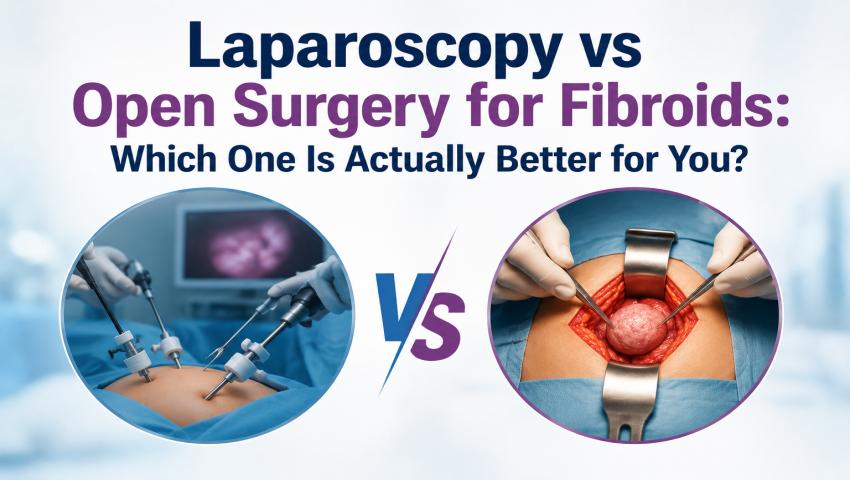
Laparoscopic myomectomy, also called minimally invasive fibroid surgery or keyhole surgery, removes uterine fibroids through 3 to 4 small cuts in the abdomen, each under 1 cm. A thin camera called a laparoscope is inserted through one of the cuts to give the surgeon a magnified, real-time view inside the abdomen.
Thin instruments are inserted through the other cuts to locate and remove each fibroid. The fibroid is broken into smaller pieces inside the abdomen and removed through the tiny incisions. The cuts in the uterine wall are then carefully stitched with dissolvable sutures.
The uterus stays completely intact. Most patients go home within a day and are back to light activities within two weeks.
What Is Open Myomectomy?
Open myomectomy, also called abdominal myomectomy, uses a single horizontal incision of 10 to 15 cm across the lower abdomen. The surgeon has direct, full access to the uterus and can physically feel and remove fibroids of any size or location.
This approach is used when fibroids are very large, when there are many fibroids spread across the uterus, or when fibroids are positioned in places that are difficult to access laparoscopically. Hospital stay is typically 3 to 5 days, and full recovery takes 4 to 6 weeks.
Open surgery is not a lesser option. For the right patient, it’s the most appropriate and effective choice.
Laparoscopy vs Open Surgery for Fibroids: A Side-by-Side Comparison
Here is a direct comparison of both approaches across the factors that matter most to patients:
Is Laparoscopic Surgery Always the Better Choice?
Not always. Laparoscopy is excellent for most fibroid cases, but it has limits. When fibroids are very large (above 10 cm), deeply embedded in the uterine muscle, or present in very large numbers, laparoscopic removal becomes technically difficult and the risk of complications increases.
In these cases, open surgery allows the surgeon full access and the ability to feel tissue by hand, which is important when dealing with complex fibroid locations. It’s also the preferred approach when robotic assistance is not available or when prior abdominal surgeries have created adhesions that limit laparoscopic access.
The comparison of laparoscopy vs open surgery for fibroids is not about one being superior to the other. It is about which approach fits the individual patient’s fibroid profile, anatomy, and goals.
Recovery: What to Expect After Each Surgery?
After Laparoscopic Myomectomy:
- Day 1 to 2: Mild soreness around the small incision sites. Some bloating and shoulder discomfort from the gas used during surgery. Rest is recommended.
- Day 3 to 5: Most women feel noticeably better. Light walking is encouraged. Pain is managed with oral tablets.
- Week 1 to 2: Light desk work and daily activities resume. Avoid lifting anything heavy.
- Week 2 to 3: Most women are back to normal routine. A follow-up ultrasound is done around 4 to 6 weeks to confirm complete healing.
After Open Myomectomy:
- Day 1 to 3: Significant discomfort managed with intravenous pain medication in hospital. Catheter in place for the first day. Slow, supervised mobilisation begins on day 2.
- Week 1 to 2: At home with rest. Wound care for the abdominal incision. Oral pain medication continues.
- Week 3 to 4: Light activities resume. No driving or heavy lifting.
- Week 4 to 6: Full recovery for most women. Return to work and normal routine. Follow-up scan at 6 weeks.
Which Surgery Is Right for You?
This is the question only your gynaecologist can answer fully after reviewing your scan reports, fibroid count, size, and location. But here are the general guidelines that most laparoscopic surgeons follow:
- Laparoscopy is typically preferred when fibroids are fewer than 4 to 5 in number, under 8 to 10 cm in size, and not deeply embedded in the posterior uterine wall.
- Open surgery is typically recommended when fibroids are very large, when there are many of them spread across the uterus, when fibroid location makes laparoscopic access difficult, or when the patient has had previous pelvic surgeries.
- Fertility plans matter: Both surgeries preserve the uterus. But the type and depth of incisions made on the uterine wall during surgery affects whether a future pregnancy will need a caesarean section. Your surgeon will discuss this clearly before the procedure.
- Surgeon experience is critical: Laparoscopic fibroid surgery requires significantly more skill than open surgery. An experienced laparoscopic surgeon can handle larger and more complex cases safely. An inexperienced one may convert to open surgery midway, which carries additional risk.
Women seeking uterine fibroid treatment in Ravet can discuss both options in detail during a consultation at Kolte Hospital. An ultrasound review and clinical assessment will determine which approach is appropriate.
Why Consult Dr. Dipak S. Kolte for Fibroid Surgery in Ravet?
If you are looking for the best obstetrician and gynecologist in Ravet for fibroid surgery, Dr. Dipak S. Kolte brings the experience, training, and patient-first approach that fibroid surgery demands.
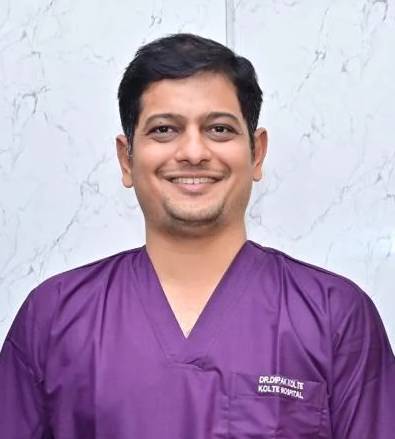
Dr. Dipak S. Kolte
MBBS, DGO, DNB (OBGY), FMAS Consultant Obstetrician, Gynecologist, Infertility & IVF Specialist
- FMAS Fellowship in Minimal Access Surgery from AMASI, Pune — a dedicated qualification in laparoscopic and minimally invasive surgical techniques
- Advanced Fellowship Training in Laparoscopy, Fertility, and Sonography for comprehensive women’s healthcare
- 16+ years of clinical experience in Obstetrics and Gynecology with numerous complex fibroid cases managed across PCMC and Pune
- Active member of FOGSI, POGS, IMA, and AMASI, following the highest standards in gynaecological care
- Available at Kolte Hospital, Ravet, serving patients from Ravet, Wakad, Hinjewadi, Punawale, Nigdi, and surrounding PCMC areas
Conclusion:
Laparoscopy and open surgery both remove fibroids effectively. The right choice depends on your fibroid size, number, location, and fertility goals. One is not automatically better than the other.
What matters is getting the right evaluation before deciding. A thorough scan review and an honest consultation will tell you exactly which approach suits your case.
If fibroids are affecting your life, do not wait. Book a consultation with Gynaec Laparoscopic Surgeon in Ravet, PCMC, Dr. Dipak S. Kolte at Kolte Hospital, Ravet and get a clear answer today.
Frequently Asked Questions:
For most women with smaller or fewer fibroids, laparoscopic myomectomy is the better choice. It offers less pain, faster recovery, and minimal scarring. Open surgery is better for large or numerous fibroids where full abdominal access is needed. The right choice depends on your fibroid profile and should be decided with your surgeon after an ultrasound review.
Recovery from laparoscopic myomectomy takes 2 to 3 weeks for most women. Light activities resume within the first week. Return to full routine and desk work happens around week 2. Heavy lifting and strenuous exercise are avoided for 4 to 6 weeks until your surgeon clears you at the follow-up visit.
Yes. Laparoscopic myomectomy preserves the uterus fully and is specifically designed to maintain fertility. Most gynaecologists recommend waiting 3 to 6 months before trying to conceive after laparoscopic surgery, allowing the uterine wall to heal completely. In many cases, pregnancy chances actually improve after fibroid removal.
Myomectomy removes only the fibroids while keeping the uterus intact, preserving the ability to conceive. Hysterectomy removes the entire uterus permanently. Myomectomy is preferred for women who want to keep their fertility or their uterus. Hysterectomy is considered when fibroids are very severe or when the family is complete and a permanent solution is desired.
Yes, laparoscopic myomectomy is a safe and well-established procedure when performed by an experienced laparoscopic surgeon. It carries a lower risk of blood loss, infection, and post-operative complications compared to open surgery. As with any surgical procedure, risks exist and are discussed in detail by your surgeon before the operation.
Surgery is recommended when fibroids cause heavy bleeding, severe pain, anaemia, or fertility problems that do not respond to medication. If your fibroid is growing rapidly or you are trying to conceive and the fibroid is affecting the uterine cavity, a consultation with a Gynaec Laparoscopic Surgeon in Ravet, PCMC will help determine the right next step.